How Much Is My Antique Worth? Complete Valuation Guide for 2026

How Much Is My Antique Worth? Start with a Method, Not a Guess
If you are asking, "How much is my antique worth?" you are already asking the right question. Most people make the same mistake in the first five minutes: they find one online listing, see a big number, and assume that number is the value. Real valuation does not work that way. The antique market rewards evidence, not optimism. To get a trustworthy estimate, you need to identify the object correctly, evaluate condition honestly, and compare it against real sold prices in the current market.
This guide is designed to give you a practical system you can apply to furniture, pottery, silver, glass, collectibles, and decorative objects. You do not need to be an auction specialist to make a credible estimate. You need a process. By the end of this article, you will know how to build a defensible value range, when to seek a formal appraisal, and how to avoid the most common overpricing and underpricing mistakes.
Quick Answer: What Determines Antique Value?
Before we go deep, here is the short answer to "how to value antiques": value is the intersection of demand, condition, authenticity, and comparables. If demand is high, condition is strong, and your item is genuinely attributed to a desirable maker or period, your estimate rises. If demand is weak, condition is compromised, or attribution is uncertain, value drops quickly.
Age alone rarely guarantees high value. A 140-year-old common piece in poor condition can sell for less than a 60-year-old design classic in excellent condition. This is why an effective antique valuation guide must be market-driven. Your goal is not to prove that your item is old. Your goal is to determine what informed buyers are paying now for comparable items.
Step 1: Identify Exactly What You Have
You cannot price what you cannot identify. Start by documenting the item like a catalog entry. Record measurements, materials, visible marks, decorative motifs, and any known family history. Take clear photos of all sides, close-ups of damage, undersides, interior construction, and signatures or stamps.
For furniture, include joinery photos, hardware details, and secondary wood types. For ceramics and porcelain, capture base marks and glaze details. For silver, record hallmarks and purity indicators such as "925" or "Sterling." For art and prints, photograph signatures, labels, frame backs, and any gallery paperwork. The more precise your identification, the better your price comps will be.
Use this naming formula when researching: era + maker + object type + material + key pattern. Example: "Edwardian sterling tea set Walker and Hall floral repousse." Better search terms lead to better comparable sales. Generic searches like "old silver set" produce noisy results and unreliable pricing.
Step 2: Confirm Authenticity Before You Estimate Price
Many people skip authentication and jump straight to value, which is risky. A reproduction can look convincing in photos, and restored pieces can hide major changes. Before assigning numbers, test whether the object is period-correct in construction and materials.
- Furniture: Check dovetails, saw marks, screws, and wear patterns for consistency with claimed age.
- Ceramics: Inspect glaze crazing, foot rim wear, and mark style consistency.
- Silver: Verify hallmarks against reliable reference databases and date letter systems.
- Glass: Look for pontil marks, mold seams, and maker etching quality.
If one major detail contradicts the story, pause the valuation. For example, a piece claimed as early 1800s with modern Phillips screws throughout is likely heavily altered or not antique. You can still value it, but at a different tier and with full disclosure. Accurate value depends on accurate identity.
Step 3: Grade Condition with Discipline
Condition is often the biggest value lever. Two visually similar antiques can sell at dramatically different prices based on restoration quality, structural stability, and originality. Do not use vague labels like "good for age." Use a repeatable grading framework.
Suggested Condition Scale
- Mint: Exceptional preservation, minimal wear, highly original, no visible faults.
- Excellent: Light age wear, no major structural issues, presentable and complete.
- Good: Noticeable wear, minor repairs, possible small chips or finish loss.
- Fair: Obvious damage or heavier restoration, still usable or displayable.
- Poor: Significant damage, missing components, extensive repairs needed.
Always compare your item to sold examples in the same condition band. A seller who compares a repaired piece to pristine museum-grade results will overprice every time. Condition honesty is the foundation of credible valuation.
Step 4: Find Real Sold Comparables, Not Aspirational Listings
If you only remember one part of this valuation guide, remember this: asking prices are marketing, sold prices are evidence. Anyone can list an item for an unrealistic amount. Only completed sales reveal market truth.
Use multiple channels to gather comps:
- eBay Sold Listings: Strong for broad consumer categories and everyday collector markets.
- LiveAuctioneers and Invaluable: Useful for higher-end antiques and specialist categories.
- Regional auction houses: Important for furniture and objects with local demand variation.
- Dealer archives: Helpful for premium retail context, but prioritize transparent sold data.
Collect at least five comparable sales from the last 6 to 12 months. If the category is illiquid, extend the time window and note the risk. Make sure comps are genuinely comparable in maker, dimensions, materials, provenance strength, and condition. A different maker or pattern can shift value by multiples, not percentages.
Step 5: Build a Defensible Value Range
Do not force a single exact number unless required for legal documentation. Market value is usually a range. Start with your comparable prices, remove outliers, and calculate a realistic middle band.
Simple approach:
- Take 5 to 10 sold comps.
- Remove one unusually low distress sale and one unusually high anomaly if clearly justified.
- Average the remaining results.
- Adjust up or down for your item's condition, provenance, and sale channel.
For example, if cleaned comp results cluster around 420, 460, 510, 540, and 590, your baseline might sit around the high 400s to low 500s. If your piece has stronger provenance than most comps, you may justify a premium. If it has repaired cracks or replaced hardware, you should discount accordingly.
A Practical Pricing Formula
Use this quick structure to estimate a listing range:
- Baseline: Median of recent sold comparables
- Condition Adjustment: Add or subtract 10% to 40% depending on faults or strengths
- Provenance Adjustment: Add premium only if documentation is credible
- Channel Adjustment: Account for auction, dealer, or direct-to-buyer context
- Fee Adjustment: Subtract marketplace fees, packing, shipping risk, and return risk
Step 6: Understand the Three Different "Values"
One reason people get confused by antique pricing is that different contexts require different numbers. The value for insurance is not the same as the value for a fast cash sale. Define valuation purpose before you finalize pricing.
- Fair Market Value: What a willing buyer and seller typically agree to today in an open market.
- Retail Replacement Value: What it may cost to replace the item from a specialist dealer, often higher.
- Liquidation or Trade Value: What a dealer may pay for quick resale margin, usually lower.
When someone asks, "How much is my antique worth?" clarify whether they mean resale value, insurance value, estate value, or retail replacement. The same object may have three different defensible numbers depending on purpose.
Step 7: Factor in Demand Cycles and Category Trends
Antique markets move in cycles. Certain categories gain momentum because of design trends, social media visibility, or generational taste shifts. Others soften for years even when quality remains high. Your estimate should reflect current demand, not only historical prestige.
Examples of demand behavior in many regions:
- Mid-century modern furniture often retains broader buyer demand than very heavy formal Victorian case pieces.
- Named studio ceramics with clear attribution can outperform anonymous decorative pottery.
- Complete matched sets generally sell better than partial sets, especially in tableware and silver services.
- Smaller, shippable antiques often move faster online than oversized freight-heavy items.
This does not mean "old styles are worthless." It means channel and audience matter. A category with slow local demand might still perform strongly in the right specialist auction or buyer network.
Step 8: Avoid the Most Common Valuation Mistakes
Most inaccurate estimates come from a handful of predictable errors. If you avoid these, your pricing quality improves immediately.
- Using only one comp: Single data points are fragile and often misleading.
- Ignoring condition defects: Chips, repairs, and replacements materially change value.
- Confusing age with rarity: Old but common items can be inexpensive.
- Trusting unverified marks: Fake or misread marks create false attribution.
- Skipping fees: Net proceeds matter more than gross sale price.
- Overstating provenance: Family stories help, but documentation carries weight.
Another major mistake is over-restoring an object before valuation. Aggressive polishing, refinishing, or repair can reduce collector appeal. When in doubt, document first, consult second, and intervene carefully.
Step 9: Decide the Best Selling Channel Before Setting Price
Price and channel are connected. You should not value an object in isolation from where it will be sold. A realistic online marketplace price may differ from a specialty auction estimate and from a dealer trade offer.
- General marketplaces: Good for broad visibility, but you must account for competition and fees.
- Specialist auctions: Better for rare maker-attributed or high-end objects with collector audiences.
- Direct dealer sale: Faster transaction, lower realized price, less effort.
- Private collector sale: Potentially strong pricing if attribution and trust are clear.
Set your target around net return, timeline, and risk tolerance. If you need fast cash, a lower but certain trade number may be appropriate. If you can wait and market carefully, your expected value range may rise.
Step 10: Know When to Get a Professional Appraisal
For many household antiques, self-research with sold comps is enough. But there are situations where a professional appraisal is the right move and often saves money in the long run.
- Possible high-value object where mispricing risk is significant.
- Insurance documentation requirements.
- Estate distribution, probate, or tax-related valuation needs.
- Uncertain attribution where expert examination can confirm maker or period.
Look for certified appraisers and ask what valuation standard they use. Request clarity on scope, assumptions, and whether the result reflects fair market value or replacement value. A quality appraisal explains methodology and evidence, not just a final number.
Use Technology to Speed Up Identification and Price Research
Manual research is still essential, but modern tools can dramatically reduce the time needed to gather evidence. If you are evaluating multiple objects, digital identification can help you triage quickly, capture marks, and build cleaner comparable sets before final pricing.
Faster Valuation Workflow with Relico
Relico helps you move from "what is this?" to a credible value range faster by combining visual identification, mark recognition, and market context in one flow.
- ✓ Capture marks, signatures, and construction details in seconds
- ✓ Reduce research time when comparing multiple antiques
- ✓ Get quick valuation guidance before committing to a listing price
- ✓ Use results as a second opinion before buying or selling
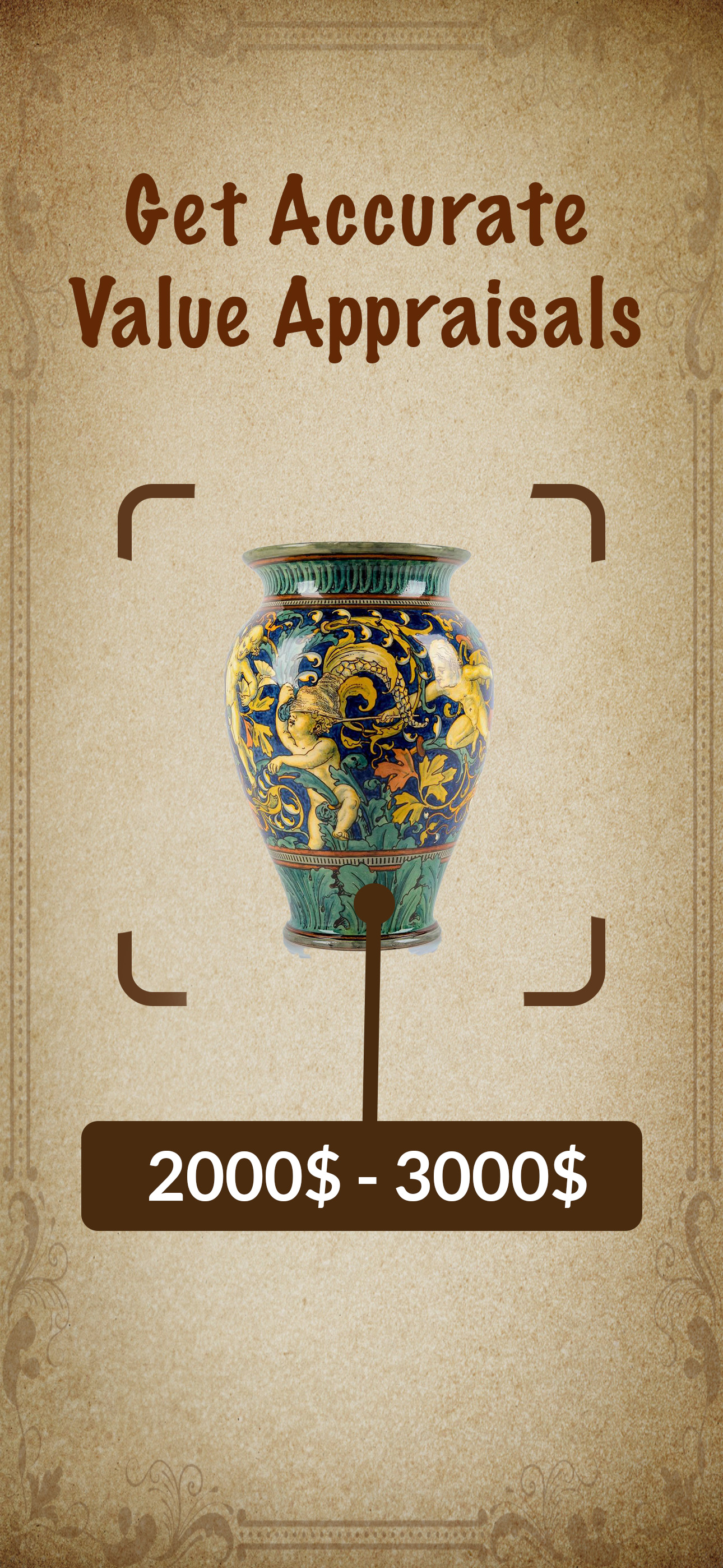
Build evidence quickly, then confirm with sold comps for a reliable final range.
Frequently Asked Questions About Antique Value
Is there a free antique value checker that is always accurate?
No tool is perfect in every category. Free checkers can be useful for direction, but final pricing should be validated with sold comparables and condition-specific adjustments. For high-value items, combine digital tools with expert review.
How much does restoration affect antique worth?
It depends on object type, quality of restoration, and collector expectations. Minor professional conservation can protect value, but heavy refinishing or visible repair often lowers collector demand. Document every intervention transparently.
How many sold comps do I need for a reliable estimate?
Five is a practical minimum for common categories, while rare categories may require fewer but deeper qualitative comparisons. If data is thin, widen the date range and explicitly increase your uncertainty band.
Should I clean my antique before valuation?
Usually, no. Gentle dusting is fine, but aggressive polishing, stripping, or deep cleaning can remove patina and reduce value. Photograph and evaluate first, then clean only when appropriate for that material and market.
Final Takeaway: Price with Evidence and Confidence
The best answer to "how much is my antique worth" is not a random number. It is a documented range backed by identification, condition grading, and current sold data. When you follow a repeatable method, you stop guessing and start pricing like a professional.
Use this process every time: identify clearly, authenticate carefully, grade condition honestly, collect sold comparables, and adjust for channel and fees. If stakes are high, bring in a certified appraiser. This is how you protect value, avoid costly mistakes, and make smarter decisions whether you are buying, selling, or insuring your antiques.
Related Articles
Explore all postsMarch 5, 2026
How Much Is My Antique Worth? A Practical Valuation Method
Use this repeatable method to estimate antique value with condition scoring, comparable sales, and demand signals.
Read related articleMarch 8, 2026
Antique Value Checker: What It Can and Cannot Tell You
A value checker helps with fast estimates, but this guide explains where human verification still matters.
Read related articleMarch 11, 2026
Antique Price Checker Guide for Collectors and Sellers
Price checker tools are useful when paired with the right comps. Learn how to estimate realistic sell prices.
Read related article